
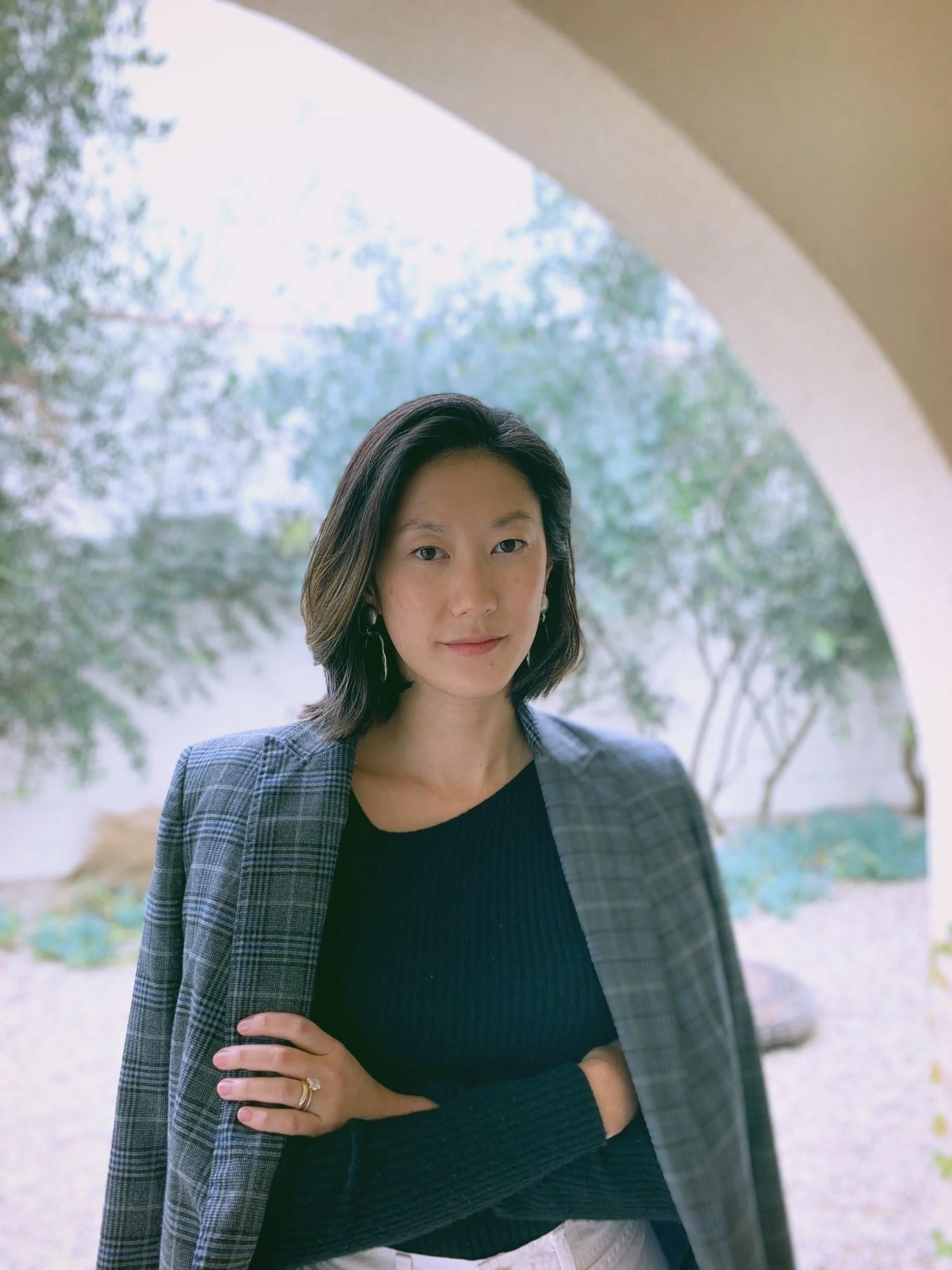
Name: Kristine Kim
Role/Function: Vice President of Impact and Responsible Sourcing, DÔEN
What are you working on these days?
I'm currently the Vice President of Impact and Responsible Sourcing at DÔEN, where much of my work centers on a question I'm deeply passionate about: how do we build a beautiful, thriving business while doing right by the people and communities who make it possible?
We recently became B Corp certified, an exciting milestone that reflects years of intentional work and a shared commitment to doing business differently. I'm especially energized by our partnership with RISE, through which we're investing in worker wellbeing training at the factory level. We just finished our first program with our longstanding supplier partner and reached 900 workers! At the same time, we're deepening our work in responsible sourcing, traceability and environmental stewardship, weaving these considerations into the fabric of how we operate and grow.
What excites me most is the opportunity to move beyond sustainability as a set of initiatives and make it part of the very DNA of a business. I believe the most meaningful impact happens when doing good and building a successful business aren't competing ambitions, but one and the same. It feels like an exciting mandate as we grow.
How did you break into the impact space? What career advice would you give to professionals who are just starting out or looking to transition?
My first job in fashion was in sourcing and R&D, where I had a front-row seat to the incredible innovations coming out of fabric mills, particularly around more sustainable materials and production techniques. At the same time, I had a longstanding passion for workers' rights, and I began to see how these two worlds intersected. It was a lightbulb moment for me — realizing the enormous influence a brand can have through the decisions it makes across its value chain. That realization ultimately led me to pursue a master's in Sustainable Development Practice at Columbia University, and I've been working at that intersection ever since.
My advice to anyone looking to break into impact is to start with the skills you already have. Sustainability isn't a single discipline; it touches virtually every part of a business. Whether your background is in finance, design, operations, marketing or sourcing, there's likely a way to channel your expertise toward meaningful change. You don't necessarily need to reinvent your career to make an impact. Sometimes, it's about looking at the work you're already doing through a different lens and recognizing where you have the power to move the needle.
Working in impact is often about driving change. What is the skill or trait that has been most important for your work as a change agent? How did you learn or hone it?
For a long time, I believed the superpower of a sustainability practitioner was the ability to zoom out to see the big picture while simultaneously zooming in on the granular details. You need to be able to toggle between systems thinking and the realities on the ground to drive meaningful progress. And while I still believe that's essential, I've come to realize that the real superpower is stakeholder engagement.
Technical expertise and strategic vision can only take you so far. The real magic happens when you can bring people along with you — cultivating trust, finding common ground and galvanizing people around a shared ambition. Sustainability is inherently cross-functional, and so much of our work depends on influencing people over whom we have no direct authority.
It's a skill I've honed through experience, often by learning that having the right answer isn't the same as getting something done. I've become a much more effective change agent by learning to listen, understand what motivates different stakeholders and translate impact priorities into something that resonates with them. Ultimately, lasting change isn't something you can mandate. It's something you build together.
How has the way you think about communicating sustainability changed over the course of your career? What do you think it takes to get it right?
Communicating sustainability has always been a bit of a balancing act for me. I'm deeply wary of greenwashing, but equally conscious of the risks of greenhushing. There's so much meaningful work happening behind the scenes that deserves to be shared, but finding the right way to tell those stories, with both integrity and emotion, isn't always straightforward.
Earlier in my career, I leaned heavily on data and technical rigor, believing that the more evidence we shared, the more credible our message would be. While I still believe that credibility must be earned through measurable progress, I've come to appreciate that more information doesn't necessarily make for better communication. We've increasingly embraced third-party certifications and independent verification to substantiate our work, allowing us to communicate with greater confidence and clarity.
Ultimately, I think it comes down to knowing your audience. At DÔEN, we're fortunate to have a community that genuinely cares about our impact journey and follows our progress closely. I want our storytelling to honor that curiosity without overwhelming people with technical details. The rigor should always be there, even if it isn't always front and center.
The question I'm still sitting with is how to make sustainability storytelling both accessible and compelling without oversimplifying the complexity of the work. I think the sweet spot is where credibility meets connection — where the science and data underpin the story, but the humanity is what brings it to life.
What's a communication moment from your work that you're particularly proud of? Why do you think it landed?
Some of my favorite communication moments are actually internal, during our quarterly all-company meetings. It's an opportunity for our team to step outside the day-to-day work and share the progress we've made, celebrate milestones and reconnect everyone to the bigger picture of why we do what we do.
There's something incredibly energizing about bringing an entire organization together around a shared sense of purpose. These moments remind us that the work isn't happening in a silo, and that everyone, regardless of their role, has a hand in moving us forward.
I think what makes these moments resonate is that they're as much about celebrating people as they are about communicating progress. They're a wonderful morale booster for the company, and, truthfully, for me too! It's a reminder that sustainability storytelling isn't just about inspiring consumers or external audiences. Sometimes the most important audience is the one sitting right beside you.
Who in the impact space do you think is communicating their work really well right now? What are they doing differently?
I've been really inspired by the work VEJA is doing to build impact-driven value chains from the ground up. I recently had the pleasure of attending a screening of their documentary spotlighting the polyester recyclers in their value chain. What struck me was how beautifully they celebrated the people and ingenuity behind the work. It was an elegant, joyful evening that gave the people who are so often invisible in fashion's storytelling the recognition they deserve.
Another standout moment was a conversation hosted by Reformation's Chief Sustainability Officer, Kathleen Talbot, with climate activist Leah Thomas. It was a thoughtful, candid fireside chat that invited genuine dialogue and some wonderfully challenging questions from the audience. I found that openness both brave and refreshing.
What I admire about both approaches is that they move beyond simply broadcasting sustainability achievements. They're creating spaces for connection, curiosity and conversation. I think there's something really powerful about inviting people into the work rather than just telling them about it.