
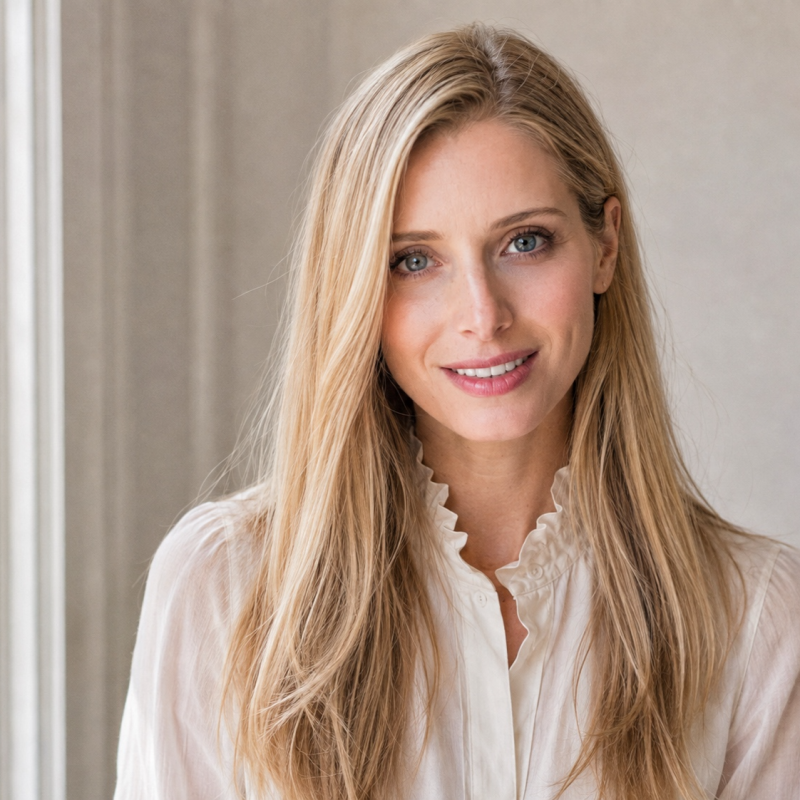
Name: Christina Ross
Role/Function: Head of Science and Impact, Credo Beauty
What are you working on these days?
I lead Science & Impact at Credo Beauty, where I toggle between ingredient safety, sustainability, responsible sourcing and scientific advocacy. I'm lucky to have this role because I get to think about the science behind a particular ingredient to the bigger question of how we change the way an industry operates.
Right now I'm focused on making the science behind our standards more accessible. We've just built an Ingredient Library that explains how we evaluate ingredients and why we make our decisions with scientific references. I'm also growing Credo Qualified, a program I created to recognize manufacturers and suppliers helping move the industry forward. So much of a company's impact is determined long before a product reaches the shelf, and I find that work particularly exciting.
How did you break into the impact space? What career advice would you give to professionals who are just starting out or looking to transition?
I came into sustainability over time through my career. My education is in both public health and toxicology. I started out my career in consulting for industrial chemicals and then product stewardship, but over time I became more interested in being a scientist who was in the room when decisions were made. That led me to leading science at Credo.
My advice is to develop a real area of expertise and meet as many people as you can, but stay open-minded about where it takes you – so many backgrounds and roles can lean into the sustainability space. I'd also encourage people to learn how businesses run because working in sustainability has to be grounded in what a business is willing and able to support.
Working in impact is often about driving change. What is the skill or trait that has been most important for your work as a change agent? How did you learn or hone it?
I think I'd say pragmatism. I'm trained as a scientist, and I naturally want the most evidence-based answer to a problem but when you're trying to help influence how a business operates, you also have to understand the realities your teams are working within. So, I can be thinking about chemical safety or an environmental impact, but my colleague is thinking about something totally different. Usually asking really good questions helps to align and being ok with holding on to principles, but having flexibility on how to get to the end goal helps.
How has the way you think about communicating sustainability changed over the course of your career? What do you think it takes to get it right?
Sustainability is often communicated in very black-and-white terms, while the reality is there are tradeoffs in almost any decision. So both internally at a company and to your end consumer, you really do a disservice if you’re not considering all sides. I also think we've placed too much onus on consumers. It feels so unreasonable to expect someone shopping for a red lipstick to understand supply chains or packaging lifecycles. The companies really changing the game are the ones that can focus on making it easier for the consumer to “do good” and being honest about what “doing good” means in their company’s terms.
What's a communication moment from your work that you're particularly proud of? Why do you think it landed?
I’m so thrilled by the way Credo communicates about ingredient safety in an optimistic way. For a long time, clean beauty has relied on lists of ingredients to avoid. While these lists did help to start a conversation with the consumer, it’s also true that they created a lot of binary ways of thinking about something that's actually super complex. At Credo, we've been moving toward a more transparent approach centered on our Ingredient Requirements and our new Ingredient Library. We’re hoping that by trusting our customers with more information and explaining how we evaluate ingredients and the actually cited science behind our decisions, we can build even more consumer trust. It’s just been launched, so it’s still early, but I’m super excited about it.
Who in the impact space do you think is communicating their work really well right now? What are they doing differently?
The Ellen MacArthur Foundation. They're making strides toward a circular economy through a practical business lens instead of an abstract aim, which is so much more common. What I especially like is that they both defined the problem and then rolled up their sleeves to give businesses the tools to work toward it – and something I modeled in building Credo Qualified. We have so many alarming statistics about the state of the planet and honestly, for my own sake, I'm really focused on communication that gives people possibility and agency.