
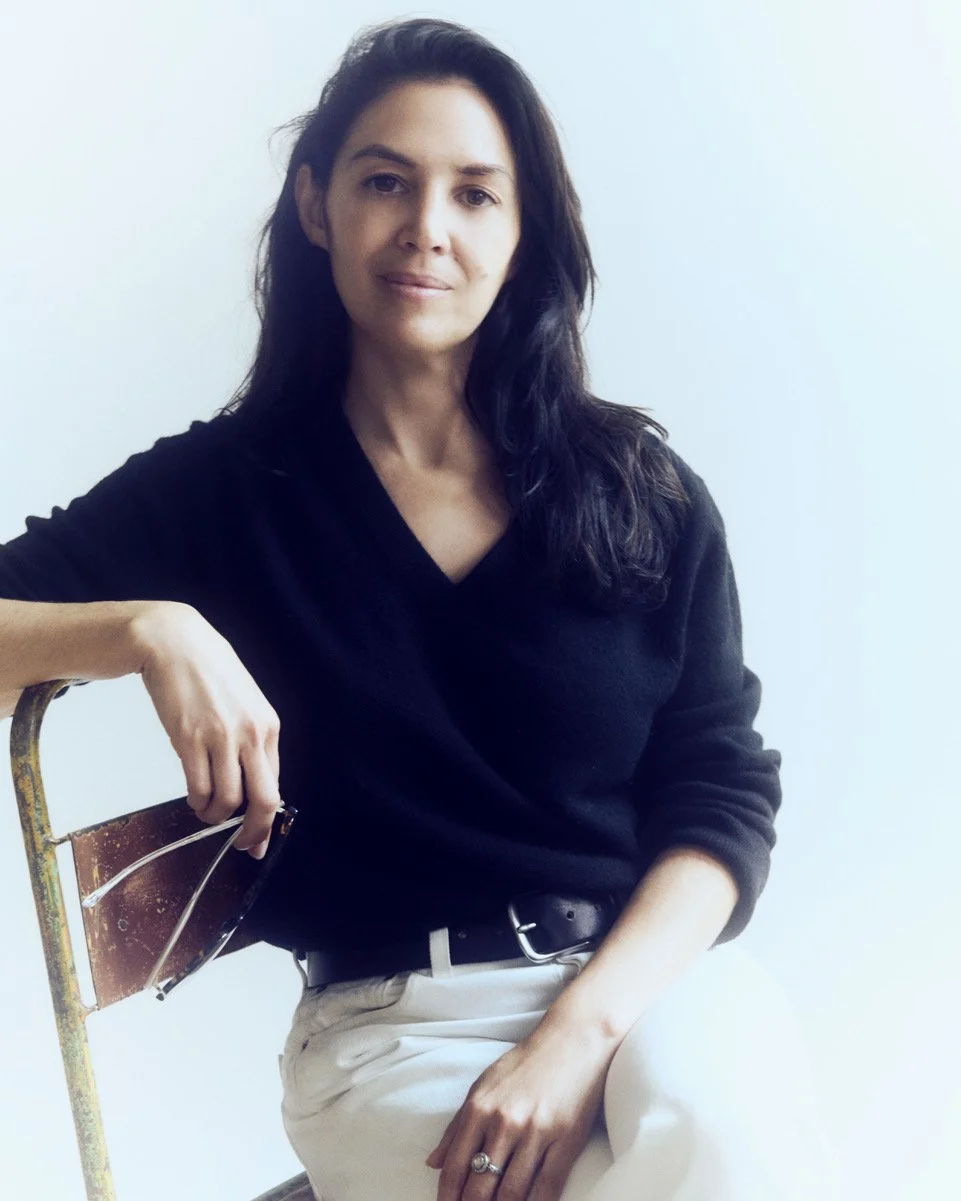
Name: Felicia Garcia-Rivera
Role/Function: Creative Strategist
What are you working on these days?
I’m working on a variety of projects at the moment. As a consultant, I work with brands in the fashion and beauty space on projects small and large — everything from outlining sustainability guidelines and communications around set guidelines and practices to creative direction, content creation and brand strategy. I also write about the state of the fashion industry’s relationship to sustainability for outlets like Icarus Complex, a climate-focused independent magazine. I’ll do deeper dives on that in my Substack launching next year. I’m also launching a creative studio that draws on my experience in fashion, storytelling, culture and cultivating sustainability.
What was the “aha” moment that sparked your interest in social and environmental impact?
I have always been inspired by changemakers in every industry. In my case, my interest in the impact space, specifically within fashion, was a gradual build-up. As I learned more about the destructive impact of the industry, I just felt I couldn’t continue to engage with it in the same capacity. I considered switching gears and industries altogether but thought, instead, why don’t I use the knowledge and experience I already have to engage with the issues present within the industry I knew and loved and attempt to drive positive change within it. I do however, remember, the distinct feeling of walking into an H&M to get things for a shoot, and feeling nauseated by the sheer volume of product and the knowledge of how much of it would end up in landfill.
How did you break into the impact space? What career advice would you give to professionals who are just starting out or looking to transition?
I went back to school to earn my MBA and focused on sustainable business. I purposefully chose a business school, NYU Stern, that had a Center for Sustainable Business since I knew I wanted to move in that direction and wanted courses focused in that area. Despite the degree, the transition wasn’t easy or immediate and at times I still feel it’s an ongoing process to find my most effective role in the impact space. During graduate school and after, I immersed myself in research and attended relevant events both in-person and online to learn and to meet people. Eventually some connections led to projects and gained experience.
My advice would be to evaluate your skillset and get clear about what you can offer now and where you want to go in the industry (of course this can always change). Then, reach out to organizations and people doing work you are interested in where you think your skillset may be applicable. Keep showing up to as many events, both online and in-person, as possible because you never know where or when you will have a great connection that will lead to a project, job or even just the discovery of a new organization that interests you.
Working in impact is often about driving change. What is the skill or trait that has been most important for your work as a change agent? How did you learn or hone it?
I would say curiosity and adaptability are key in my approach to work. I have always been curious about most things but in the impact space, my curiosity propels me to both keep researching the latest ideas and advancements in a constantly evolving space and examine and learn about the root causes and systems that have enabled the current issues. Adaptability is also key in my work as attempting to drive change often involves coming up with ideas or solutions that may fail or not be approved by the client. It’s important to be willing to move on from one approach or idea, shift perspectives and start over. As a consultant one is often working within constraints set by each project so adaptability is crucial.
What most excites you about the impact space right now?
What is exciting to me is the innovation and creativity I see being sparked by the challenges that the industry faces. In fashion, I am particularly excited by all the advances in areas like textile recycling technology and alternative textiles. Some mass-market brands are making bigger commitments to these technologies in the form of offtake agreements and more significant investment. Policy, despite some setbacks, is still an evolving narrative that is driving change as well which will hopefully serve to incentivize brands to change their methods.
What has also energized me is seeing smaller brands in the fashion space experiment with alternative business models such as a made-to-order, on-demand model or limited run editions. Some of the smaller brands are also radically transparent about their supply chain and production process. While these are small brands with niche markets, these are decisions in contrast to the overproduction model and opacity that runs rampant in the industry, and the consumer response has been positive thus far.
This season, our Impact Interviews series features members of the Change Hub, our membership community for busy sustainable business professionals. Tap into trainings, tools and a trusted network of fellow impact practitioners (including Felicia!) by JOINING US HERE.